The Real Reason Some Nigerian Children Top Their Class Every Term Has Nothing To Do With Intelligence, Lesson Teachers, Or How Much School Fees You Pay
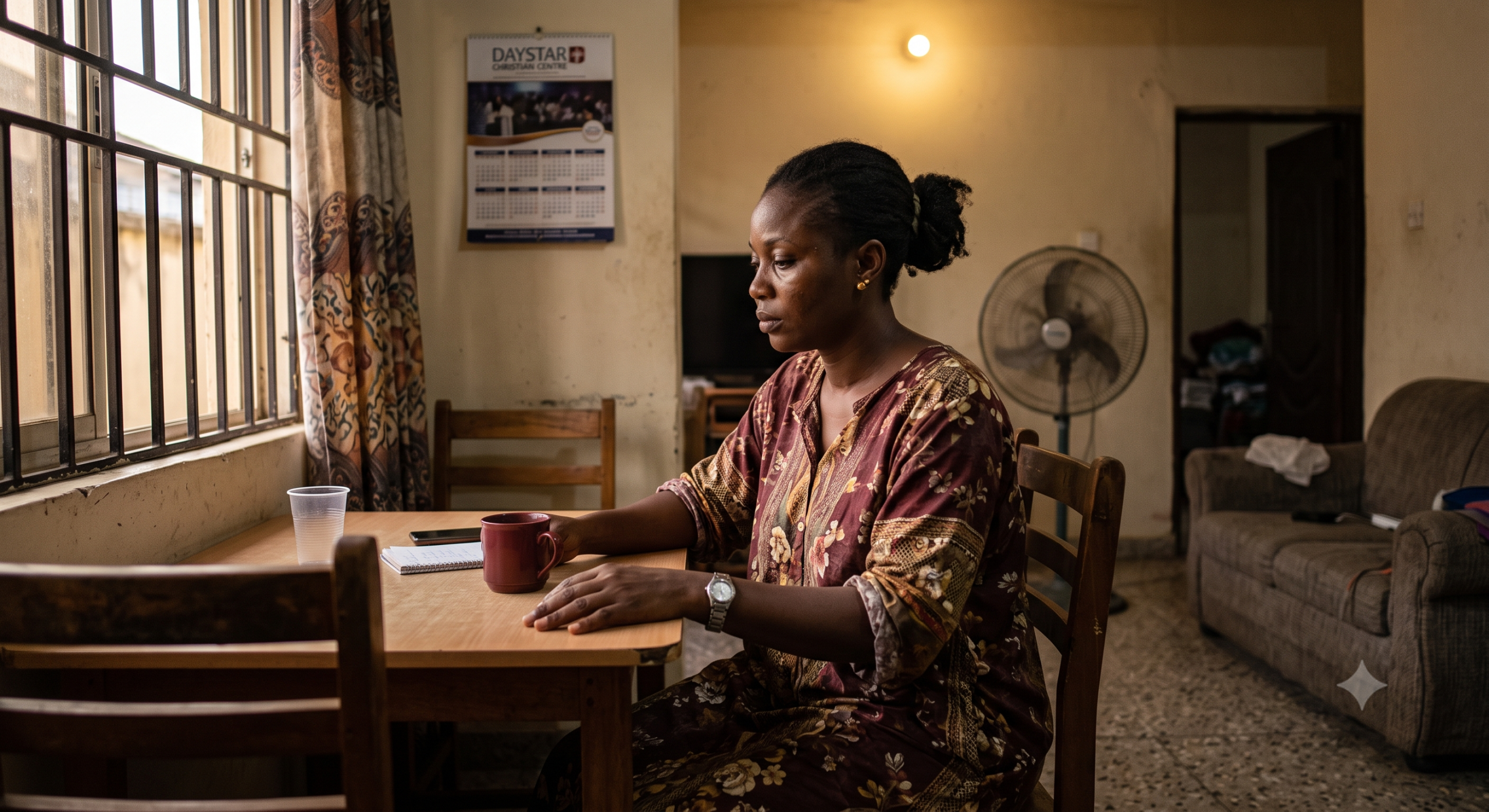
It is 8:20pm and you are shouting again.
You did not plan to. You told yourself this evening would be different, the way you told yourself last Tuesday and the Tuesday before that.
You got home at 6:40. You cooked while your mind ran through everything else still waiting for you. At 7:30 you said go and bring your book, and he brought it at 7:52, in his own time, the way he always does.
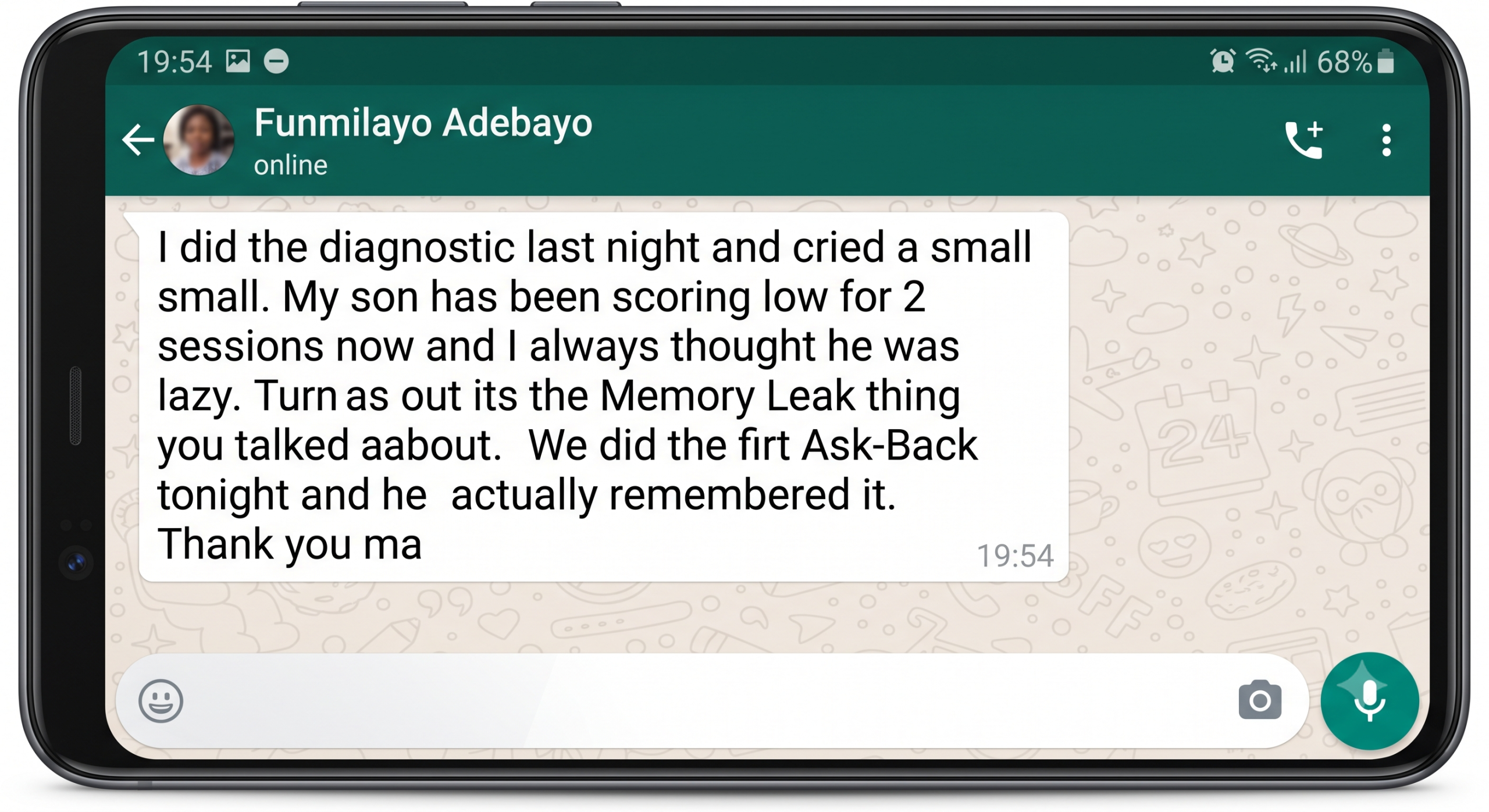
By 8:05 he could not remember what a noun is. The same noun you explained on Tuesday. You know you explained it because you remember the exact spot on the page where you both sat and went through it, and he nodded, and you felt that small lift in your chest that said he has it now.
By 8:20 your voice is up. By 8:35 he is crying, you are crying, the assignment is still half done, and you send him to bed because you cannot do this any longer tonight.
Then you sit down alone in the sitting room, and the thought arrives the way it always arrives. Is it him, or is it me?
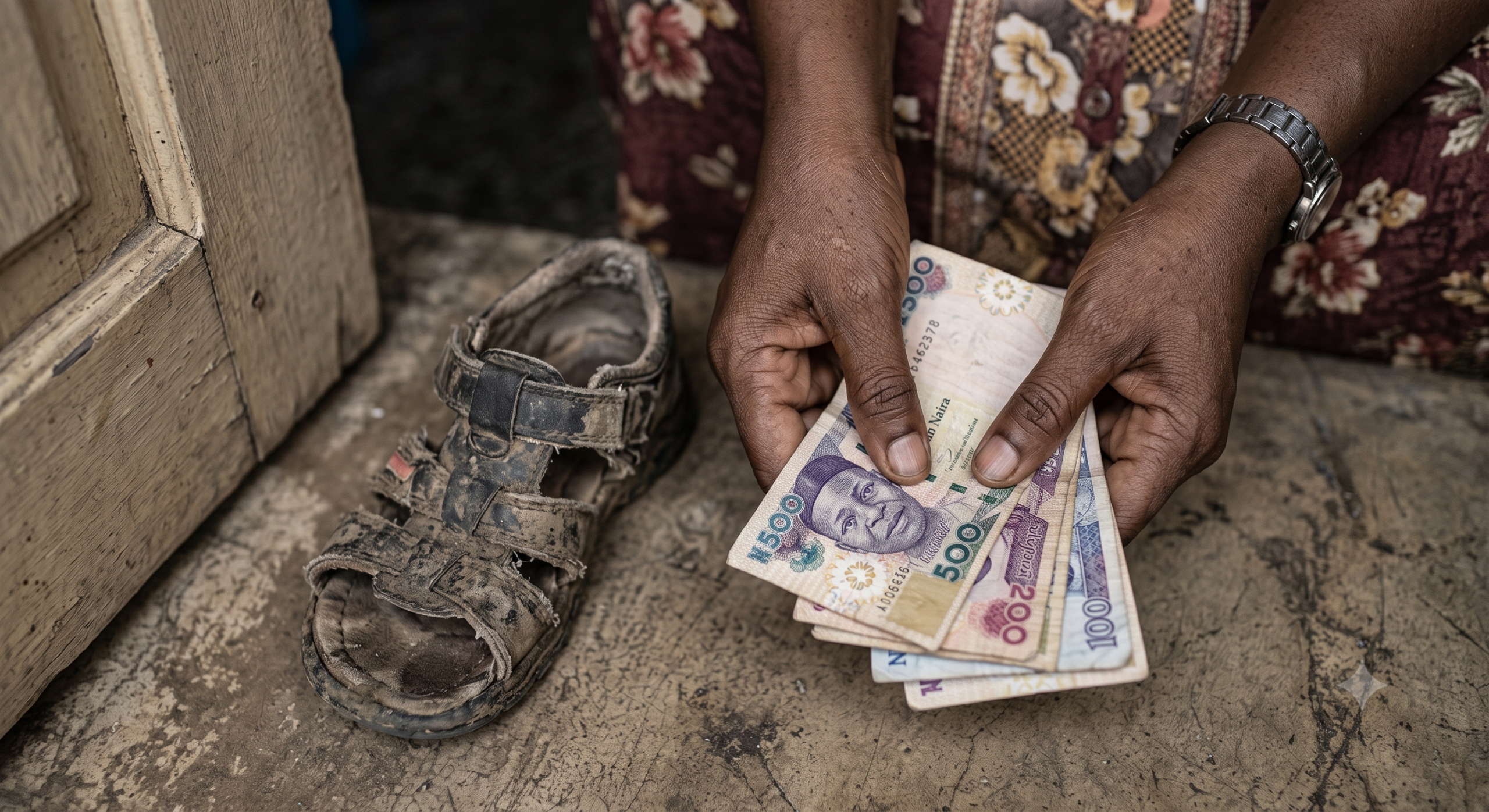
You have tried everything. Everything. Ejo, mo ti gbiyanju. You have genuinely tried. Eight months of a lesson teacher, ₦30,000 a month, money you cut from other places to keep paying, and he moved from 24th position to 22nd. You flogged him once, and lay awake afterward hating what you had become. You took the tablet away for three days and survived the war, and it crept back the moment you needed to cook again.
You bought new textbooks. New past questions. You went for three nights of prayer and fasting with your church and came home to the same folded result sheet in the bottom of your bag.
Six different things. Every single one of them cost you money, force, or hope, and not one of them was a system.
The teacher wrote playful again on his last report. She said it kindly, at open day, with another mother standing close enough to hear. You said thank you ma, walked to the car, and cried before you even started the engine.
You were brilliant in school. Your father used to bring your report card out for visitors. So where did this one come from, you sometimes catch yourself wondering, and then you hate yourself for the thought before it finishes forming.
Keep reading. What follows is not another list of study tips. It is the actual reason none of the last three years worked, and it is not what anyone has ever told you.
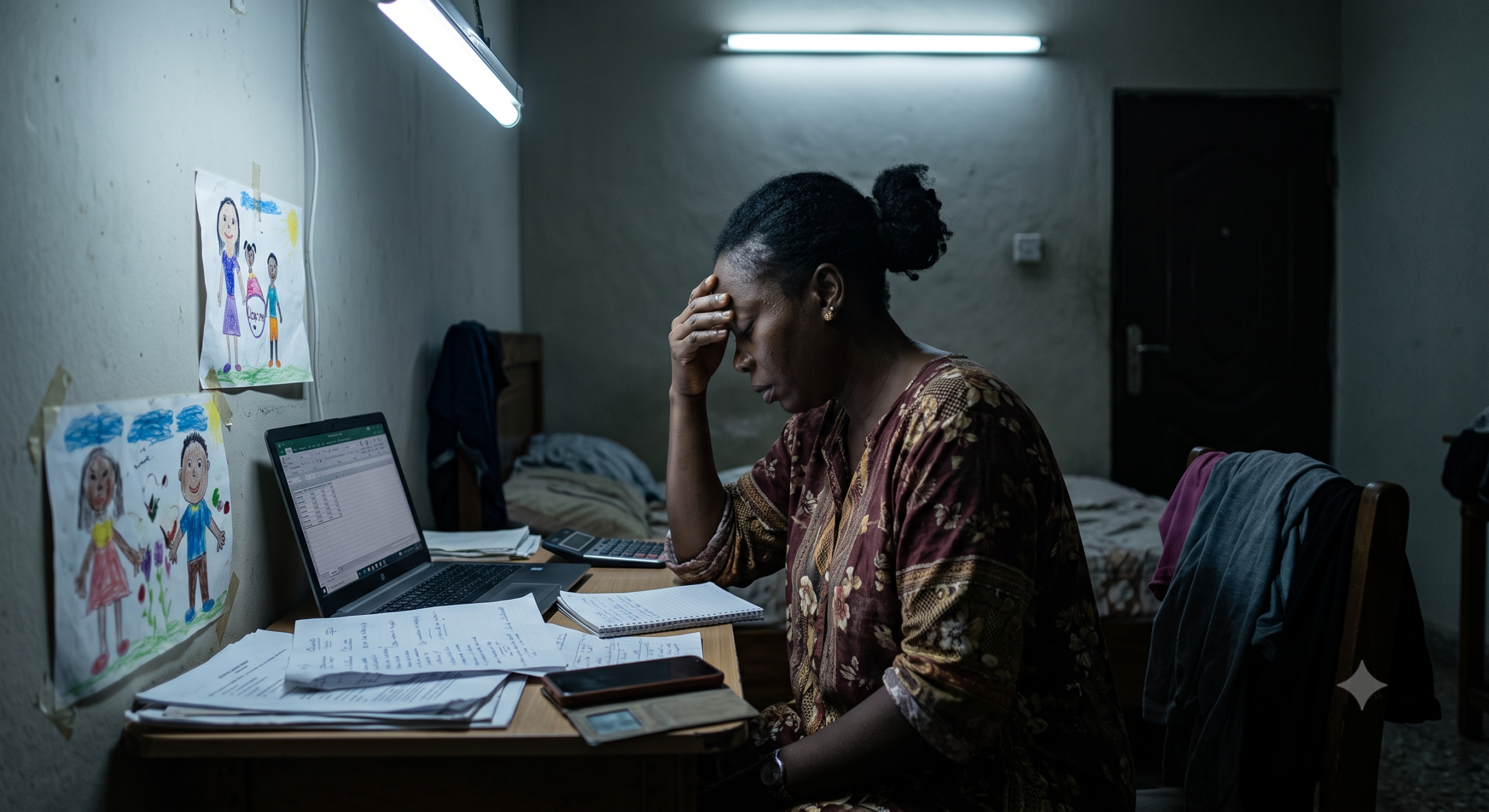
I Was That Woman Too
My name is Adaeze. I am not a teacher. I have no certificate that says I am qualified to tell you anything about how children learn. What I have is three years of the exact evenings you just read about, and one thing I found on the other side of them that I now cannot stop telling other mothers about.
It started small, the way these things do. My son was in Nursery 2, four years old, and another mother's daughter recited a whole verse from the Bible at her own birthday party, word perfect, in front of everyone. My son could not yet tell his letters apart. I clapped along with everyone else and felt something tighten in my chest that did not leave for the rest of that evening.
By Primary 1 the gap had not closed. By Primary 2 it had widened. His position moved from the low twenties to the high twenties, never once into anywhere I could be proud of on a family WhatsApp group where everyone else seemed to be posting certificates and trophies.
The emotional cost of that period is hard to describe to anyone who has not lived inside it. It was not one dramatic moment. It was hundreds of small ones. Folding a result sheet into the bottom of my bag before my husband got home. Going quiet in the family group for days at a time. Sitting in the car after open day with my hands on the wheel, not driving anywhere, just sitting there.
I tried the lesson teacher first, because that is what everyone tries first. A young man, NYSC corps member, two hours a day, four days a week. He was not lazy. He came every single day, sat with my son, worked through exercise after exercise. Eight months later, my son had moved two positions. Two. I did the arithmetic on what I had paid for those two positions and I could not say it out loud to anyone.
I tried flogging next, because my own mother had used it on me and I told myself it must work, since I had turned out fine. It worked for exactly one term. Fear is a fast fuel and a short one. By the second term he had adapted to it the way children do, and I was left with the same position and a boy who had started hiding his result sheet from me the way I used to hide mine from my husband.
I took the tablet away, because everyone said the screen was ruining his concentration. Three days of real war in my own sitting room. On the fourth day I had customers to attend to and I handed it back, and I felt like I had failed at the one thing I was supposed to be strong enough to do.
I bought more textbooks. More past questions. A second exercise book because the first one felt used up. None of it changed anything, because more material was never the thing that was missing.
I remember thinking, I was brilliant in school. So where did this child come from.
I even went for three nights of prayer with women from my church, because by then I had run out of anywhere else to turn. I am not ashamed to say that. Some of you reading this have done the same thing and have never told a single person. We prayed. We fasted. His position did not move, and I came home from the third night not knowing whether it was my faith that had failed or whether prayer was simply never meant to answer this particular question.
The chance encounter that changed things was small enough that I almost do not believe it myself when I tell it now. I was at a friend's house, and her cousin, a woman who had spent years working with children who struggle in school, was there for something unrelated entirely. My son was doing his usual thing, avoiding a book, and I made some tired joke about it. She asked me one question that no teacher, no lesson tutor, no pastor had ever asked me in three years.
What exactly is he struggling with. Not generally. Specifically.
I could not answer her. Three years, hundreds of thousands of naira, and I genuinely could not tell her what was actually broken. I could only tell her the outcome. Low position. Bad report. That was all I had ever been given by anyone, and it turns out that is not a diagnosis. It is a symptom.
She explained something to me that evening that I am going to explain to you in the pages ahead, because it rearranged everything I thought I understood about my own son. Children are not simply doing well or doing badly. There is always a specific mechanism underneath it, one of a small handful of things, and every single method I had thrown at him for three years had been aimed at nothing in particular.
I was skeptical. Of course I was. I had already spent money on people who sounded confident. But this was not a product she was selling me. It was a way of looking at the problem, and it cost me nothing to try it that first week.
I built a version of it myself, at our own kitchen table, thirty minutes a night, four nights a week. I will not pretend the first two weeks were easy. There was a night in the second week where he stumbled on something he had handled easily the week before, and my old fear came rushing straight back, the one that says none of this is working.
It was working. I did not know that yet, but it was.
By week four something had shifted that I could not explain away as luck. He answered a question at the table without me prompting him, something from nearly two weeks earlier, and the way he said it, casually, like it had always been there, made me put my pen down and just look at him for a moment.
By the end of that term his CA scores had climbed in a way they had never climbed before. Not dramatically overnight. Steadily, the way a real change looks rather than the way a miracle looks. When the report card came, I opened it in the car park the way I always did, braced for the same disappointment.
He had moved up eleven places.
I sat in that car park and cried again, but it was a completely different kind of crying than the one I had been doing for three years.
I told two other mothers what I had done, mostly because I could not keep it to myself. Both of them tried it. Both of them came back to me within weeks describing the exact same thing. The quiet evenings. The child who started asking to do the routine instead of fighting it. The report card that finally matched the child they knew was in there somewhere.
That is when I sat down and wrote everything into one place, properly, so I would never lose it and so I could hand it to any mother standing where I once stood.
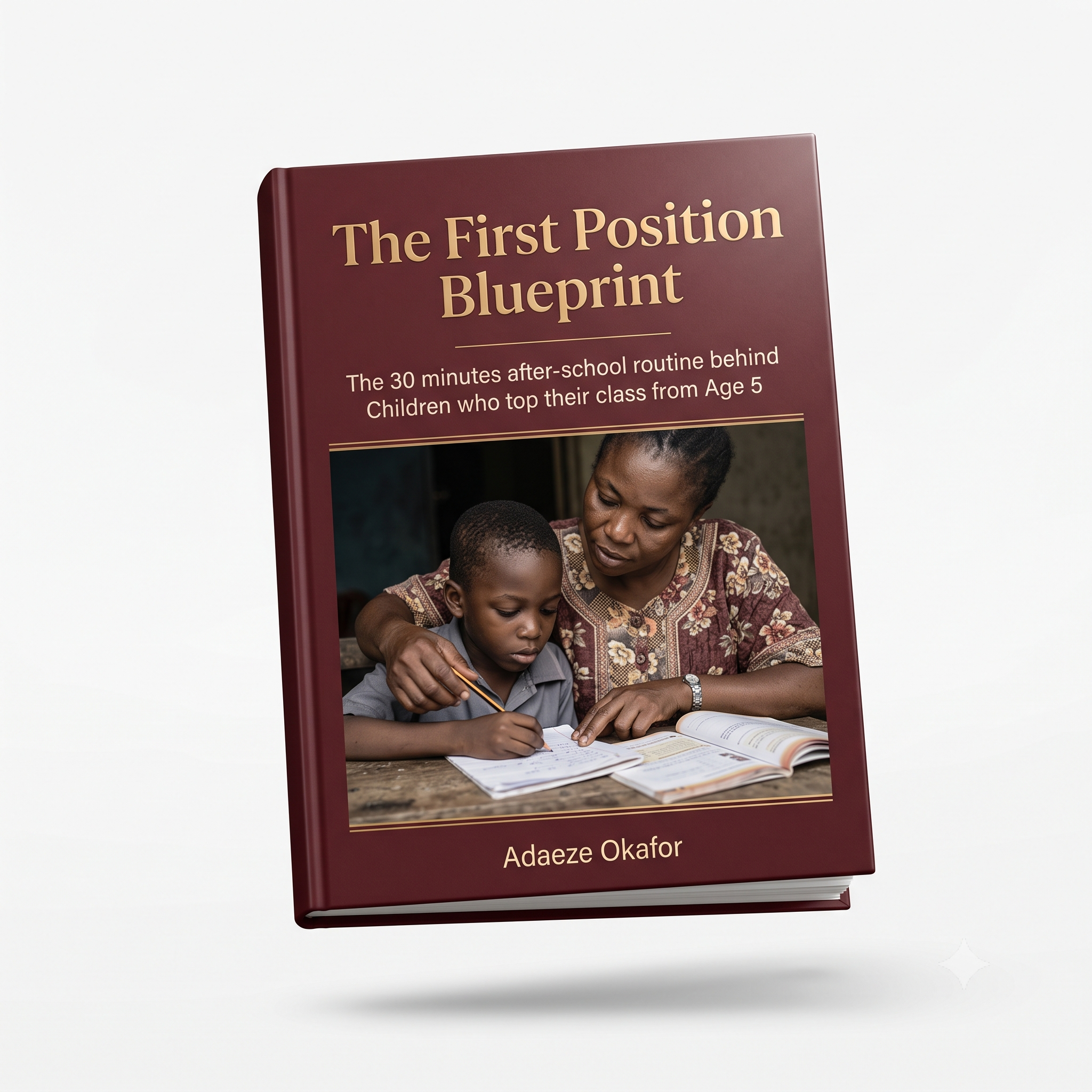
What You Actually Get
The Twelve Question Diagnostic
Before you change one thing about your evenings, you will spend ten minutes answering twelve simple questions about your child's last four weeks. By the end of it, the thing you have been calling he is just not serious for three years finally has a proper name, and you will know exactly which one of four specific problems is actually yours to solve. Page 12
The Teacher Translation Sheet
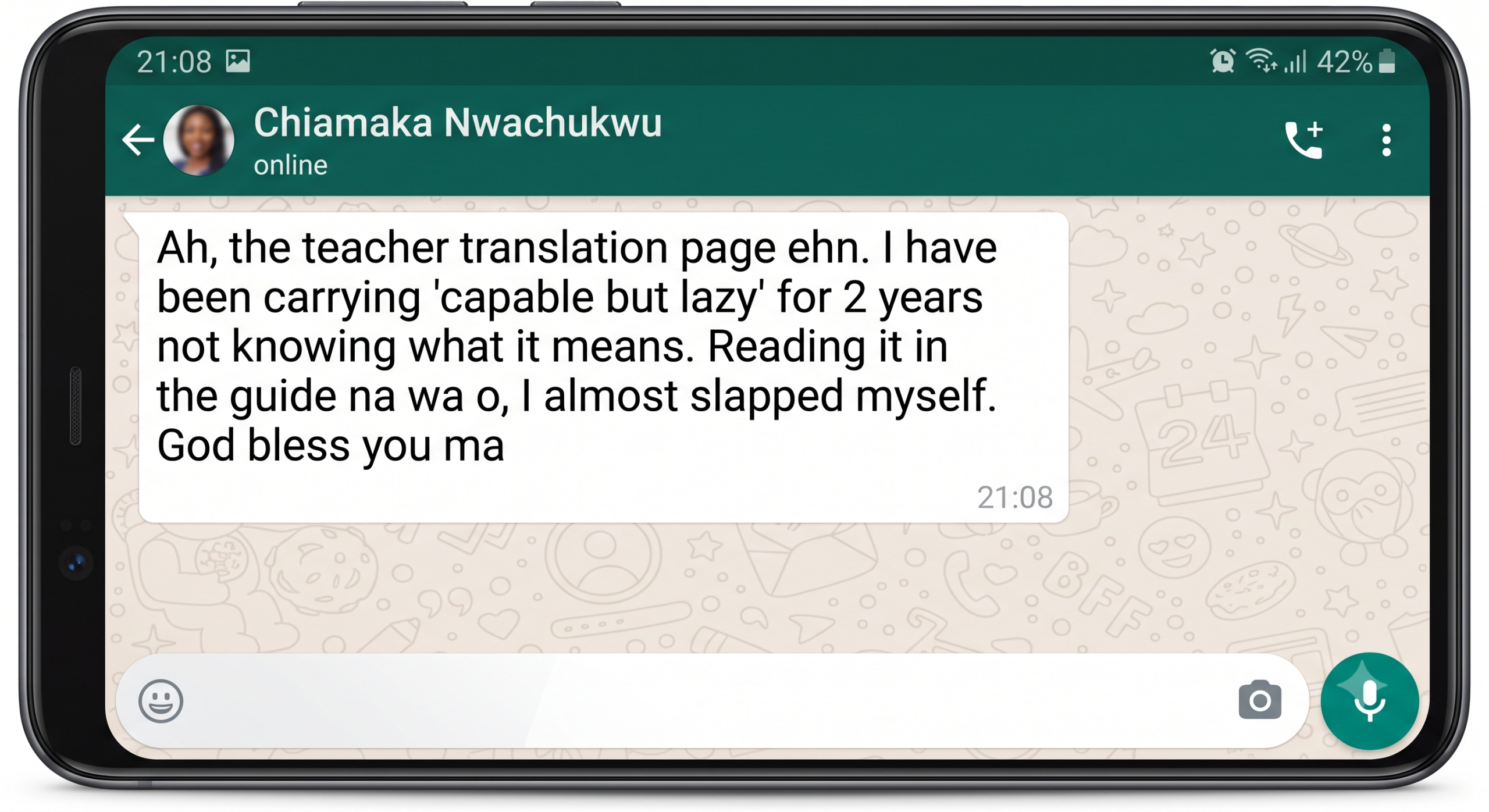
Nigerian teachers write in code because they have thirty four report sheets to complete and no safe way to say anything sharper. This page decodes exactly what playful, capable but lazy, and satisfactory actually mean, so the next comment on his report stops feeling like a riddle and starts feeling like information you can use. Page 16
Your Child's Specific Routine
Once you know which of the four problems is yours, you go straight to the one chapter written for it. Whether he crams and forgets, cannot sit still, reads without understanding, or knows it at home and freezes in the exam hall, there is a routine built for exactly that, not a generic method stretched to cover everyone. Pages 19 to 41
The 30 Minute Table
The actual routine, broken into four short blocks so nothing feels vague or open ended. You will know exactly what happens in the first three minutes, what happens in the next five, where homework fits, and how the whole thing ends on time even on nights it is not finished, without a single fight breaking out. Page 43
The Ten Minute Version For Tired Nights
Some evenings you get home at 7:15 with nothing left to give. This shorter version keeps the one thing that matters most and drops everything else, so a hard week never becomes a lost term, and you never again have to choose between your exhaustion and his progress. Page 45
The Stop Doing List
Seven specific things you can remove from your evenings this week, including the cane, the re-reading, and the two hour lesson session aimed at nothing in particular. Most mothers photograph this single page and send it straight to a friend, because it is the first time anyone has ever told them what to take off their plate instead of adding to it. Page 46
The Twelve Week Term Map And The Five Warning Signs
A week by week plan that removes every decision from your evening, plus an honest page near the end that tells you the five specific signs meaning a routine alone will not be enough and a real assessment is needed instead. It is the one part of this guide I would want you to read even if you never opened another page. Pages 47 and 52
The Mistake Almost Every Nigerian Mother Is Making Without Knowing It
Here is what nobody has ever told you plainly. He is not doing well in school is not a problem. It is a symptom. Four completely different problems can produce that exact same result, and every solution you have ever bought was aimed at the symptom rather than the actual cause underneath it.
Think about a mechanic checking a car that will not start. He does not simply begin replacing parts and hoping one of them fixes it. He checks three or four specific things first, because a car that will not start has a small number of possible causes, and finding the right one takes minutes while guessing wrong can take weeks and cost far more.
That is exactly what happened to your son's lesson teacher. He was not lazy and he was not incompetent. He simply applied two hours a day to a problem that was never diagnosed first, the same way a mechanic who skips the checking stage keeps replacing parts on a car that was never going to start that way.
This guide does the checking first. Twelve questions sort your child into one of four specific categories, and every routine after that point is aimed directly at the actual mechanism, not at a vague hope that more hours will eventually help.
This is also why the guide asks for thirty minutes instead of two hours. Aimed effort does more in thirty minutes than unaimed effort does in two, because the two hours your lesson teacher spent were never wasted on laziness. They were wasted on the wrong target.
Once you know the target, everything gets shorter, calmer, and considerably more effective, and that is the entire mechanism behind this guide.
Just So You Know, Putting This Guide Together Cost Me Over ₦180,000
I am telling you this not to complain about it, but so you understand exactly what is behind the price you are about to see below.
| Interviewing real Nigerian mothers and understanding the actual problem, not the assumed one | ₦45,000 |
| Developing and testing the four routines with real children over two terms | ₦60,000 |
| Design and layout so the guide is actually usable at a tired kitchen table | ₦35,000 |
| Editing and proofreading to make sure every step is clear on the first read | ₦20,000 |
| Running the final version past ten mothers and correcting what confused them | ₦20,000 |
| Total invested before this guide ever reached you | ₦180,000 |
You Are Not The Only One Who Has Tried Everything
I am not going to charge you what it cost me to put this together. ₦180,000.
I am not even going to charge you ₦25,000.
Not even ₦15,000.
Today, you pay just
This relaunch price is tied to the timer below. Once it reaches zero, the page returns to ₦15,000.
My Promise To You
Go through this guide, try the routine at your own table, and if you feel it was not worth every naira, contact me directly and I will refund you in full. No stress, no long story required. I would rather give your money back than have you feel deceived.
A Few Quick Answers
How do I receive the guide after paying?
The moment your payment is confirmed, the full guide is sent straight to your email address as a downloadable file. There is nothing to wait for and nothing to collect.
What if it does not work for me?
You are covered by the guarantee above. If you go through it properly and feel it was not worth what you paid, simply reach out and you will be refunded in full.
Is my payment safe?
Yes. All payments are processed securely through Paystack, the same trusted platform used by thousands of Nigerian businesses every day.
It Is Not Just Us Saying It
Two Ways This Term Can Go
If You Get The Blueprint Today
If You Close This Page
You are already going to sit at that table tonight. The only real question is whether tonight is another guess, or the first night you finally know what you are aiming at.
₦5,000 is less than one bag of sachet water a day for a month. Your evenings are worth more than that.