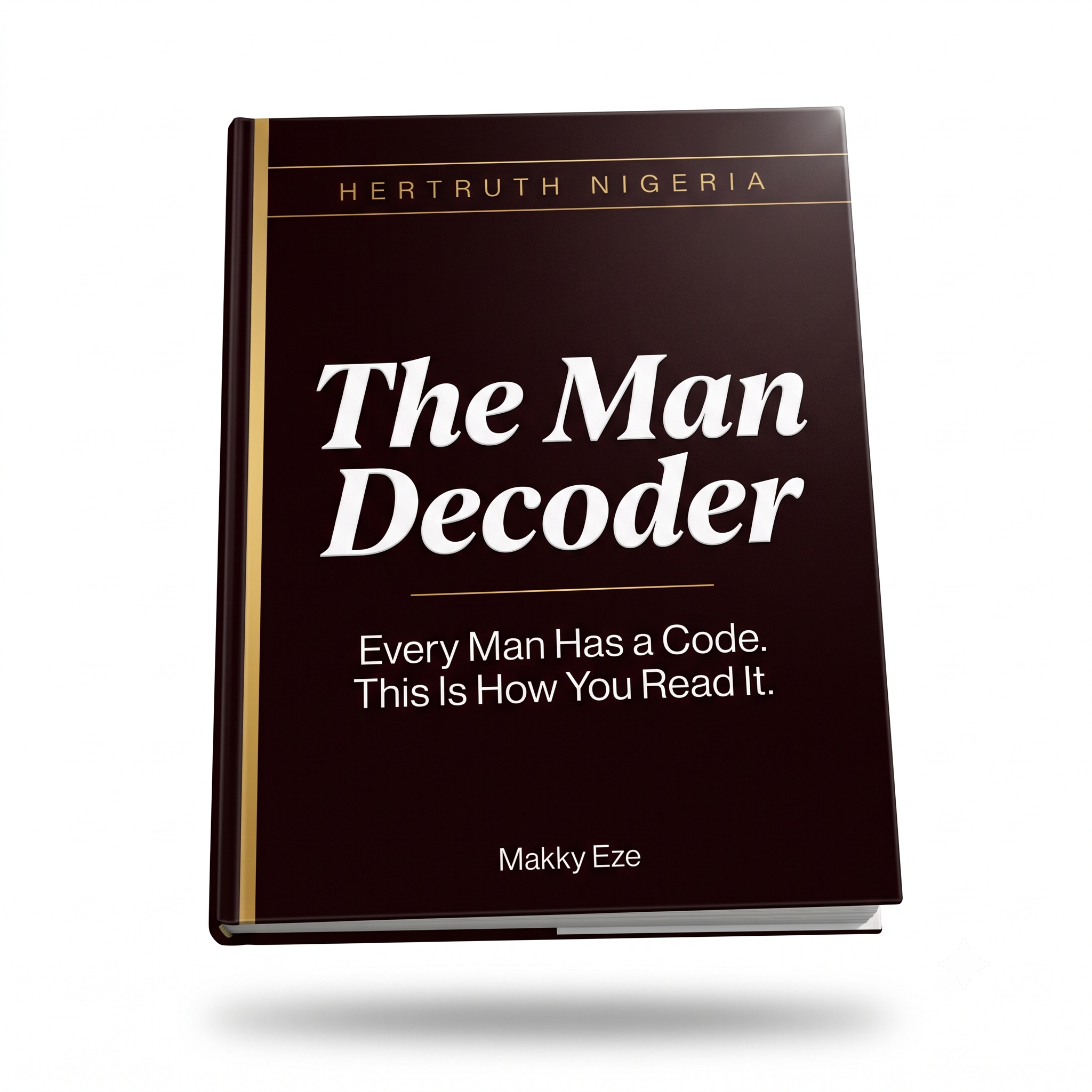

You wake up and the first thing you do — before you even sit up straight — is check his WhatsApp status.
He was online at 1:48am. You were not awake. You do not know who he was talking to at 1:48am. And you are not going to ask, because you do not want to seem like that kind of woman.
Just stay calm. Do not overthink it. You are fine.
You are not fine.
You make tea. You say your morning prayer, but your mind is not in it. You are halfway through and already replaying the last conversation you had with him, turning every sentence over in your hands, looking for the exact moment something shifted. You cannot find it. That is the part that is killing you — you cannot find where it went wrong.
And this is not the first time.
You have been here before. Different man, same story. You gave him your time, your energy, your consistency. You were the one who remembered small things. You were the one who showed up. You cooked. You prayed. You waited. You were, by every measure your mother and your church and your culture ever gave you, the good woman.
He still left. Or he stayed but never truly chose you. Or he strung you along for two years and married someone he met for six months.
You have said those words. Maybe not out loud. Maybe only in your head at night, or in a WhatsApp message you typed and deleted. But you have felt them. And the feeling does not go away, because underneath it is a question that frightens you more than the heartbreak itself:
What if the problem is me?
Look. Your friends mean well. Your mother means well. But "pray about it," "just move on," and "the right man will come" are not instructions. They are consolations. And you have had enough consolation. You need answers. You need to understand why you keep attracting men who are not ready. Why every relationship starts the same way and ends the same way. Why you, a woman who is intelligent, God-fearing, and genuinely good, cannot seem to make love land and stay.
You have tried being more submissive. You tried being more independent. You read a book written for American women that had nothing to do with your reality as a Nigerian woman dealing with your family's timeline, a man's "I'm not ready" and the quiet shame of still being single at 31.
None of it worked. Because none of it was built for you.
There is a reason you keep ending up here. A real, specific, fixable reason. And it has nothing to do with your looks, your cooking, your standards being too high, or God's timing not being your timing. The reason lives in something you were taught — or more accurately, something you were never taught.
Keep reading. Because what comes next changed everything for me, and I believe it will change things for you too.
I need to tell you something I have not said easily before.
I was 28 years old, I had a job I was proud of, a flat I had furnished myself, a life that looked put-together from the outside. And I was sitting on my bathroom floor at 11pm because I had just found out that the man I had spent three years with — three years of Sundays, three years of "we will sort out the future when I'm more stable" — had gotten engaged.
Not to me.
I found out on Instagram, the way you find out about things you were never supposed to find out. His sister posted a photo. He was smiling in a way I had never seen him smile. She was someone he had known for seven months.
Seven months. I gave him three years and he gave her a ring in seven months.
I told myself I was fine for a week. I went to work. I responded to messages. I even laughed at something in a group chat. But I was not fine. I was running on the fuel of not-yet-processed pain, and when it finally hit me, it hit me completely.
I stopped eating properly. I lost weight, but not in any way I wanted. I would wake up at 3am with my chest tight, my mind already replaying the relationship looking for the moment I missed. The clue I should have seen. The sign I ignored.
I talked to my friends. They said the things friends say. "He did not deserve you." "God has better." "His loss." I nodded and smiled and went home and felt exactly as lost as before. Their words were kind. They were not useful.
I talked to my mother. She said I needed to pray more, present myself better, and stop being so focused on my career because men do not want a woman who is always busy. I love my mother. I did not find that helpful either.
I went to church. I fasted. I journalled. I downloaded meditation apps. I read a self-help book that kept telling me to "know my worth" without once explaining what that actually means or what to do on a Tuesday evening when you are missing someone who hurt you.
None of it was working. And then I started getting angry. Not at him. At myself. Because I realised that I had done this before. The relationship before this one had ended the same way. Different man, different city, same ending. I had cried the same tears, said the same prayers, and walked back out into the world ready to do the whole thing again.
I was not unlucky. I was repeating a pattern I did not even know I had.
The turning point came on an ordinary Wednesday evening. I was in a Facebook group — one of those Nigerian women's support groups — and someone posted a question: "Has anyone else noticed that we were taught to be the good woman but never taught how to choose the right man?" The responses went on for hours. Hundreds of them. Women sharing the exact same story I had been living in silence.
And one comment stopped me completely. A woman wrote: "We were raised to give. Nobody raised us to vet. That is why we keep arriving at the same place."
I sat with that for three days.
We were raised to give. Nobody raised us to vet.
It was the most accurate sentence anyone had ever used to describe my entire romantic life. I had been operating with half a map. I knew how to be a good partner. I did not know how to determine whether someone deserved that partnership before I gave it. I did not know how to read a man's actions in the first thirty days and know — not hope, not guess — whether he was serious. I did not know what a high-value man actually looked like in real life as opposed to in theory. And I did not know that the energy I was operating from — anxious, giving, available, proving — was the exact energy that repels the kind of man I was actually looking for.
I spent the next several months doing the work nobody had told me to do. I studied attachment styles and what mine was doing to my choices. I mapped out every relationship I had ever been in and found the pattern so clearly it made me feel sick and relieved at the same time. I rebuilt what I actually needed — not what I was told to want — into a set of real non-negotiables. I practised moving through the world as a woman who was doing the choosing, not waiting to be chosen.
And something changed. Not overnight. Slowly. But undeniably.
The men who started showing up were different. Not perfect — but serious. Consistent. Clear about their intentions. I found myself not anxious in the early stages. I found myself watching what they did, not just what they said. I found myself leaving situations that were not right for me without drama, without begging, without going back.
Six months after that Wednesday evening in the Facebook group, I was in a relationship with a man who called without being prompted, who introduced me to people in his life within the first two months, who said what he meant and did what he said.
Three of my closest friends asked me what I had done differently. I tried to explain it in conversation but there was too much to say. So I wrote it all down. Every step, every tool, every realisation. In the order it needs to happen. With the cultural context that every other relationship guide ignores.
I wrote it for you.
Introducing
How Nigerian Women Attract Men Who Choose, Commit, and Stay — A Complete 21-Day Guide
Inside the playbook
Seven sections. Each one built for the Nigerian woman navigating modern love with old-world pressure and no real roadmap.
This is the section that changes everything before anything else changes. Most women go from one relationship to the next without ever stopping to identify the specific cycle they are in. This section gives you the Pattern Diagnostic tool — a structured 15-minute exercise that shows you exactly which romantic pattern you have been repeating, the type of man it reliably attracts, and the belief underneath it that keeps the cycle going. Women who complete this section in the first sitting report finally having a name for something they have felt for years. You will find it starting on page 4, and it will be the most important 15 minutes you spend this week. (Pages 4–11)
This section is the one no Western relationship book ever goes near, and it is the reason those books have never fully worked for you. It takes the specific messages Nigerian culture gave you about love — submit, wait, cook, be available, do not chase but do not be too independent either — and shows you exactly how each one was designed for a different era, a different power dynamic, and a different kind of man than the one you are trying to attract today. This is not an attack on your culture. It is an honest examination of which parts of what you were taught are serving you and which parts have been costing you years. You will finish this section feeling less like something is wrong with you and more like you were given an incomplete map. That shift alone is worth the entire guide. (Pages 12–18)
There is a difference between saying you have standards and actually having them. Most women have a vague idea of what they want — kind, stable, God-fearing, serious — but no system for holding that line when an attractive man who checks two of those boxes walks in and starts paying attention. This section walks you through the Non-Negotiables Builder: a structured process for identifying your three absolute requirements, three strong preferences, and three things you can genuinely flex on. Then it gives you the internal checkpoint — a simple question you ask yourself at the end of weeks one, two, and three with any new person — to know whether you are still standing in your standards or you have quietly started negotiating them away. Because the problem is rarely that women do not know their standards. The problem is that nobody taught us how to keep them when it gets emotional. (Pages 19–25)
This is the section you needed at 24. It is a complete vetting framework for the first thirty days with any new man — not based on what he says, but on what he consistently does. You will learn the twelve behaviours that indicate genuine interest and serious intent, the eight specific actions that reveal unavailability no matter how convincingly he speaks, and the five Nigerian-specific scenarios where good men behave differently from how Western relationship guides describe them. There is also a Red Flag and Green Flag Decoder built specifically around Nigerian cultural and social dynamics — because a man not introducing you to his family in month two means something different in Lagos than it does in London, and this guide understands that. By the end of this section, you will be assessing men's behaviour with clarity instead of hope. (Pages 26–33)
There is a specific type of exhaustion that comes from always being the one who cares more. From always following up first. From always being available, always being patient, always making yourself smaller so he does not feel overwhelmed. This section addresses the energy you are operating from — not in a vague "feminine energy" way that gives no practical guidance, but with a weekly self-assessment tool that shows you, concretely, whether you are in receiving mode or giving mode in any given week. It also gives you the five daily practices that shift your internal state from anxious and proving to grounded and selective. These are not affirmations. They are behavioural adjustments that change how you show up, which changes the quality of man who stays. (Pages 34–39)
The most consistent complaint from women who have done the inner work is this: "I know the theory but I do not know what to actually say." This section fixes that. You get word-for-word scripts for eight situations that Nigerian women face in dating and early relationships — what to say when he starts pulling away and you want to address it without pushing him further; how to ask about his intentions without sounding desperate or confrontational; how to set a boundary around your time without coming across as cold; what to say when he asks for patience on commitment and you need to know what "patient" actually means in months. Every script is written the way a Nigerian woman actually speaks — not the polished language of an American relationship coach, but real, warm, direct, and clear. (Pages 40–46)
The last section is about something most relationship guides do not want to talk about: leaving. Not dramatically. Not with ultimatums or crying scenes or long voice notes. Leaving cleanly, with your dignity fully intact, in a way that closes the door properly and does not leave you looking back three months later wondering if you made a mistake. You get the Soft Exit Script — the exact way to end a situationship or dead-end connection without creating chaos. And then the guide closes with the New Beginning framework: what to do in the 21 days after you complete this guide to step into the dating world as a woman who is doing the choosing, not waiting to be chosen. This is not where the story ends. It is where yours begins. (Pages 47–53)
Why it works
Every relationship guide you have ever read was built on one assumption: that your problem is emotional. That if you heal enough, love yourself enough, and raise your vibration enough, the right man will appear.
That is half the answer. And half an answer is what keeps you stuck.
You were taught to give. You were never taught to vet. You were taught to submit. You were never taught to select. You were taught to wait. You were never taught what you are actually waiting for — or how to recognise it when it arrives.
This guide works because it addresses both sides of that equation. The inner work — understanding your pattern, rebuilding your standards, shifting your energy — runs alongside the outer tools: the vetting checklist, the scripts, the behavioural assessment framework. You do not just understand what went wrong. You have a concrete system for making sure it does not happen again.
And it is built entirely around the Nigerian woman's reality. Not an American woman's reality imported and relabelled. The family pressure, the "when are you getting married" conversations, the church dynamics, the economic considerations, the cultural expectations of what a good woman looks and behaves like — all of it is accounted for. Because it is not enough to know the theory if the theory does not fit your actual life.
This is not motivation. This is a method. And methods produce results that motivation never sustains.
I am not telling you this to impress you. I am telling you so you understand the research, the conversations, the failures, and the rebuilding that went into every page of this guide before it reached you.
| Professional relationship psychology consultation and research review | ₦45,000 |
| Cultural research and interviews with Nigerian women across Lagos, Abuja, Port Harcourt, and London | ₦38,000 |
| Professional editing and structural review — two full passes | ₦32,000 |
| Graphic design and layout for the complete 57-page guide and all included tools | ₦28,000 |
| Beta testing with 22 Nigerian women and revisions based on their feedback | ₦37,000 |
| Total investment to build this guide | ₦180,000+ |
I could charge ₦50,000 for this and it would still be a fraction of what it cost me to create. I am not doing that. But I need you to understand the weight of what you are receiving before I tell you what I am actually asking.
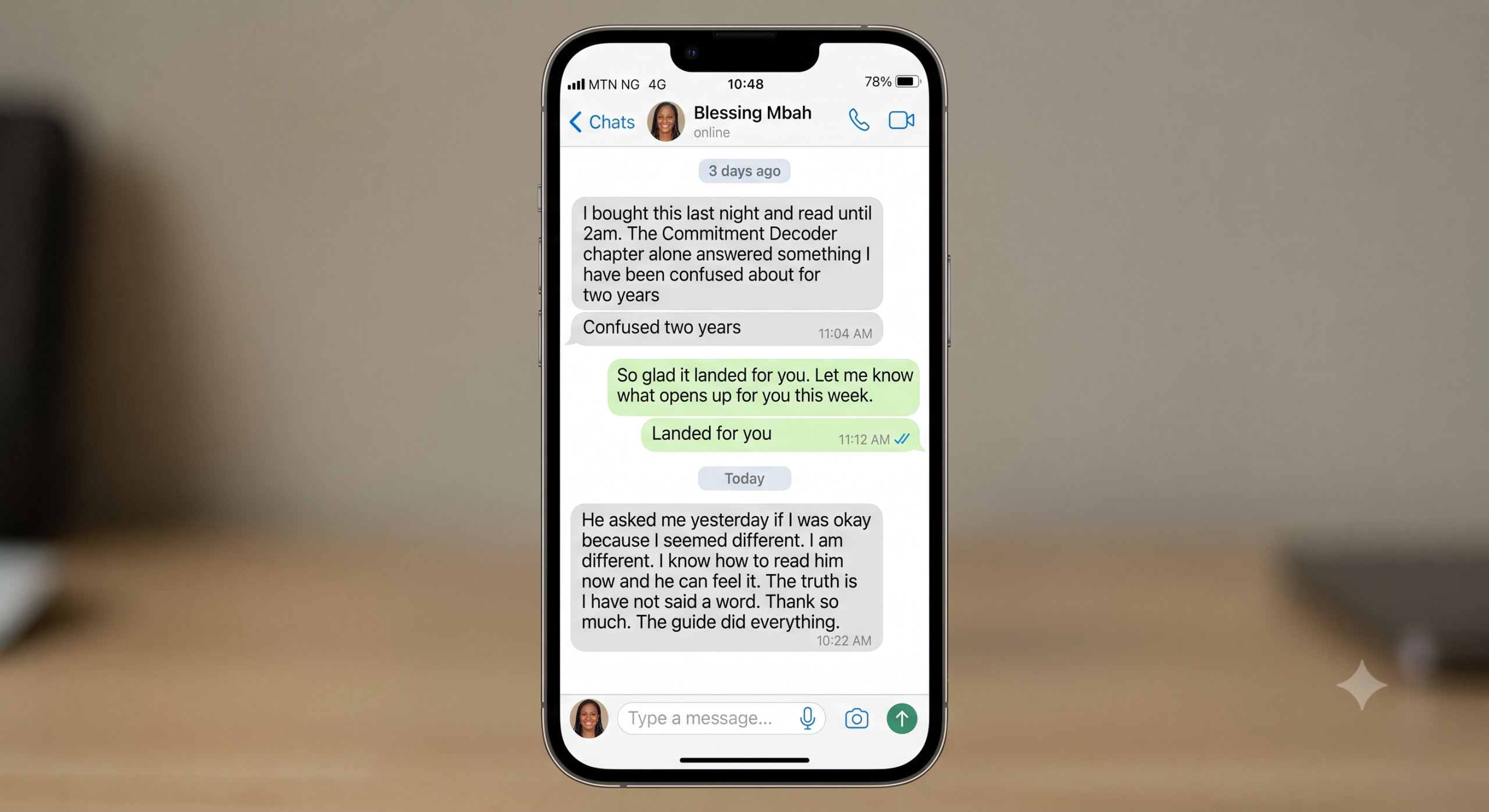
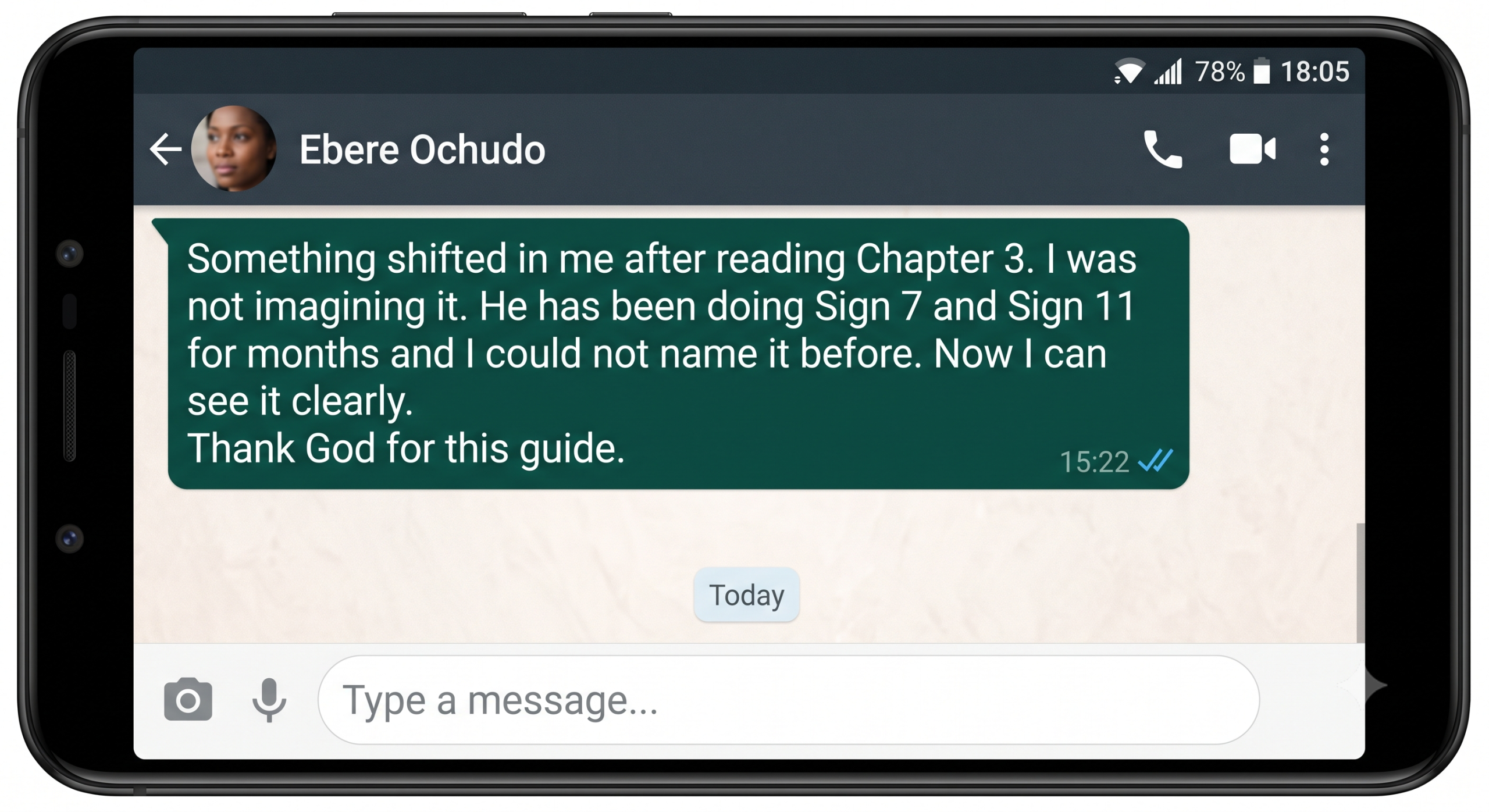
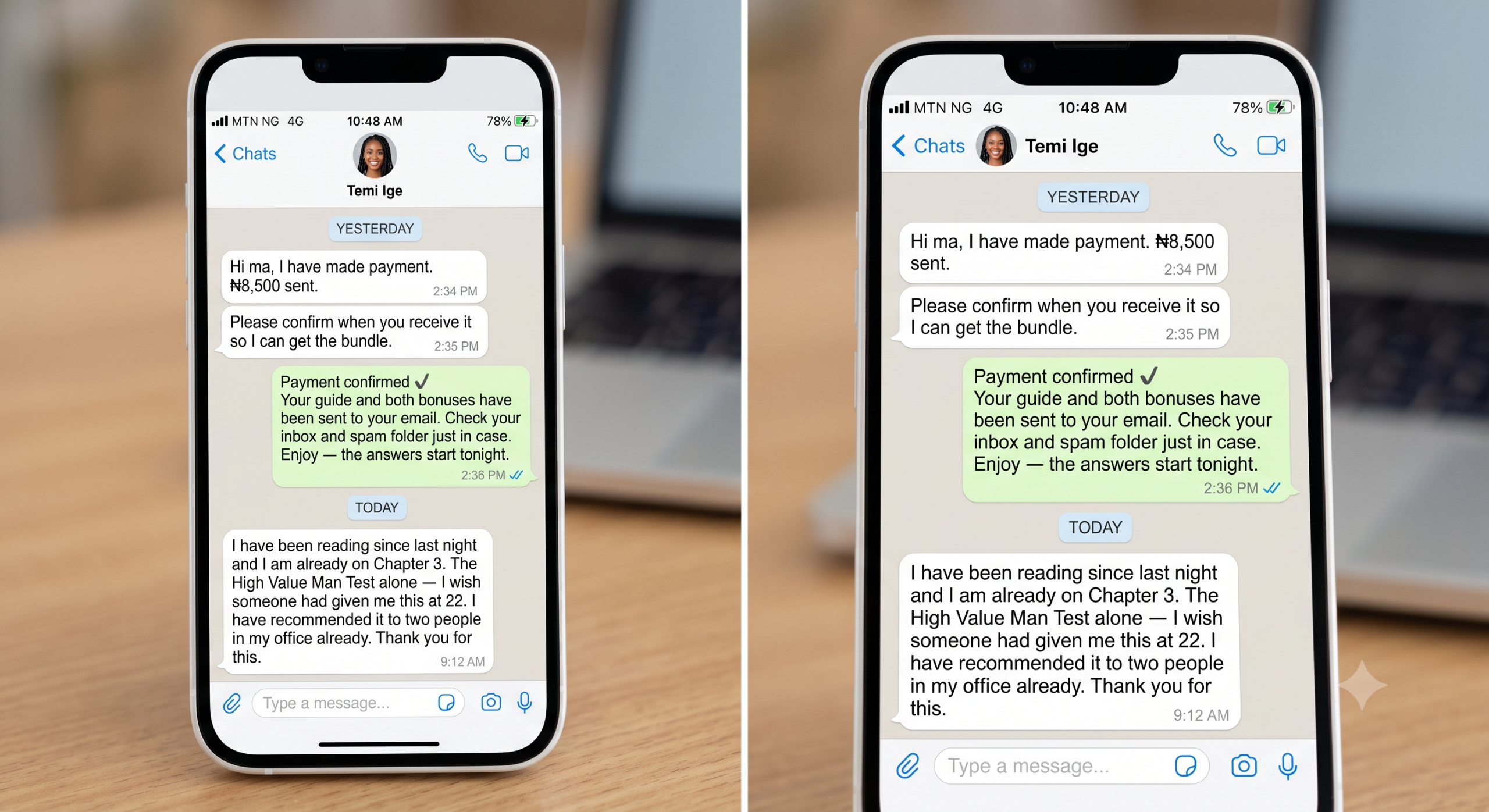
The Pattern Diagnostic on Day 1 alone was worth everything. I saw myself so clearly — I have been choosing the same man in different bodies since I was 23. I finished that first section and I cried, not because I was sad but because someone finally explained it. This guide is the real thing.
I have bought relationship guides before and they always feel like they were written for American women. This one knows my life. It talks about family pressure, about the church, about the "good woman" script that never worked. I am on Day 14 and I feel like a different person. Not fixed — upgraded.
The Scripts Library section changed how I communicate with men completely. I used the "what are your intentions" script on a man I had been seeing for three weeks and his response told me everything I needed to know. I exited that situation gracefully and I felt strong, not small. Thank you, Makky.
Real messages from real buyers.
Today's investment
Let me show you what I could reasonably ask for — and what I am actually asking.
What this guide cost me to create
₦180,000What I could easily charge
₦20,000I considered
₦14,000Today, you pay only
₦8,500 You save ₦11,500 — 57% off the full priceThat is less than a hair appointment. Less than a nice dinner for two. Less than what you have already spent on situations that did not work out.
But it is the most important ₦8,500 you will spend this year.
I Choose Myself Today Secure payment via Paystack. You receive instant access after payment.But first — before you pay a single kobo — let me add something that makes this even better.
Free gifts
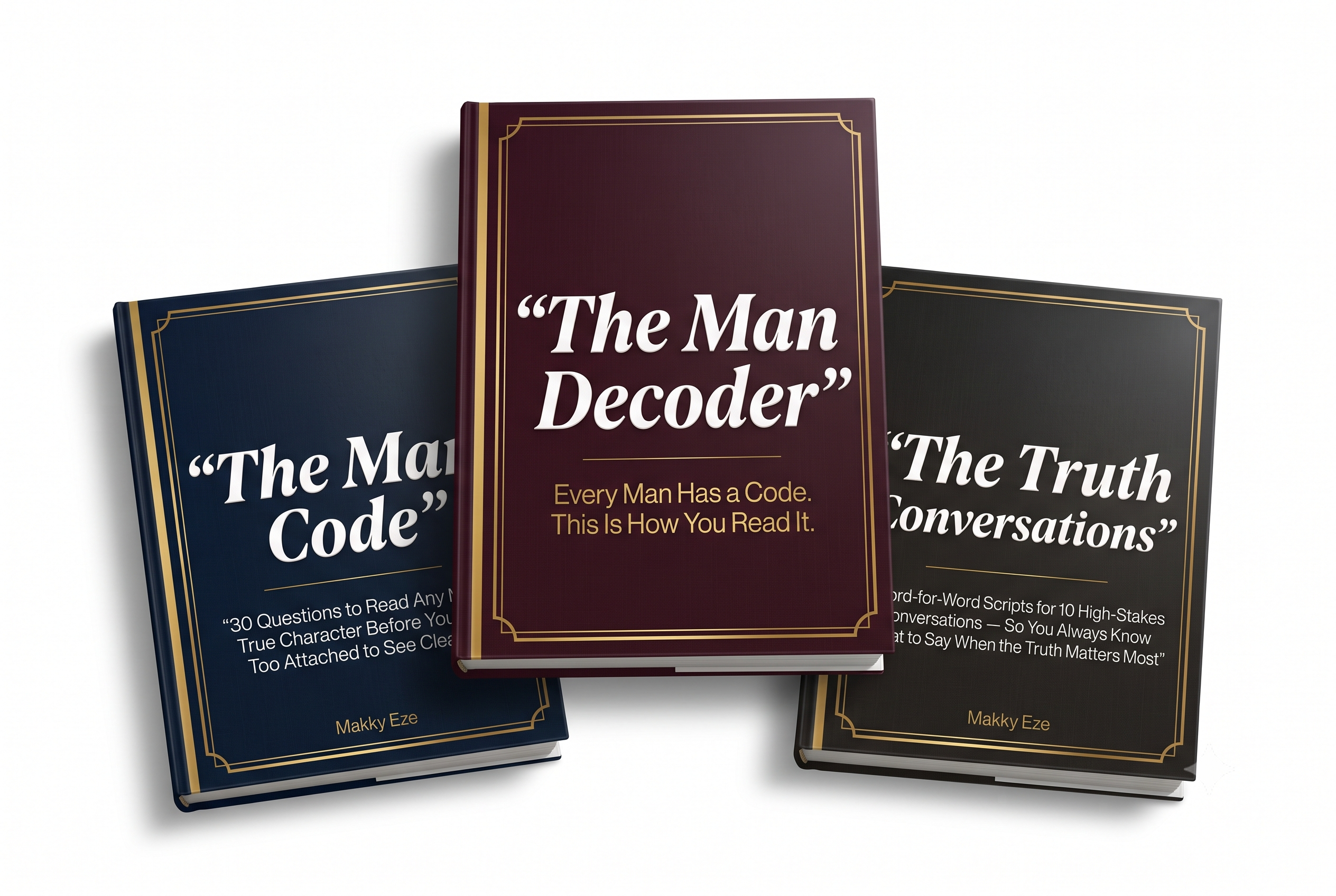
When you get The High Value Woman's Playbook today, you also receive these two bonuses completely free. They are not padding. They are the tools that make the guide work faster.
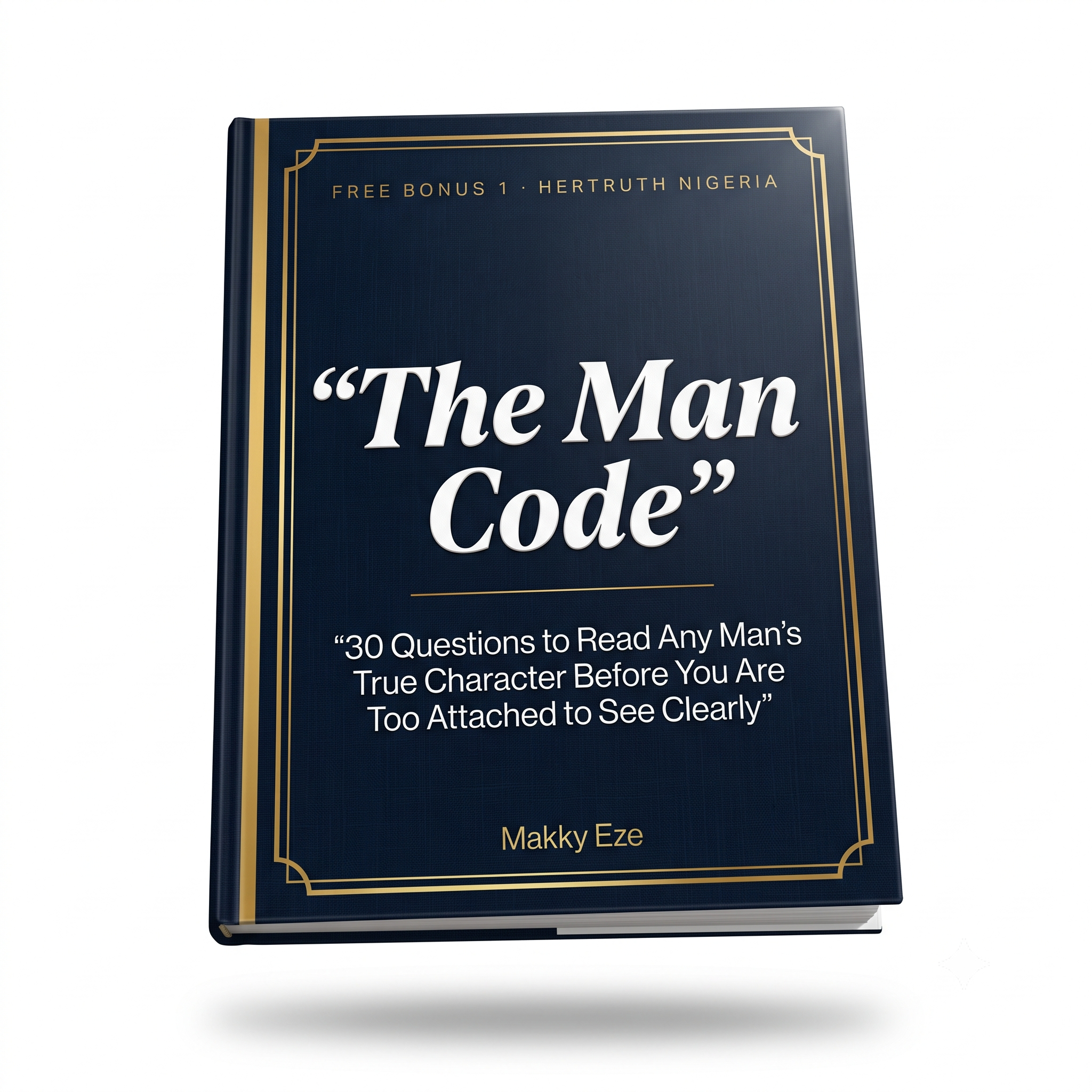
A quick-reference checklist of 30 specific questions to ask and behaviours to observe in the first 30 days with any new man. No more guessing. No more hoping. You will know within a month whether this person is serious — or whether you are about to invest more time in the wrong direction.
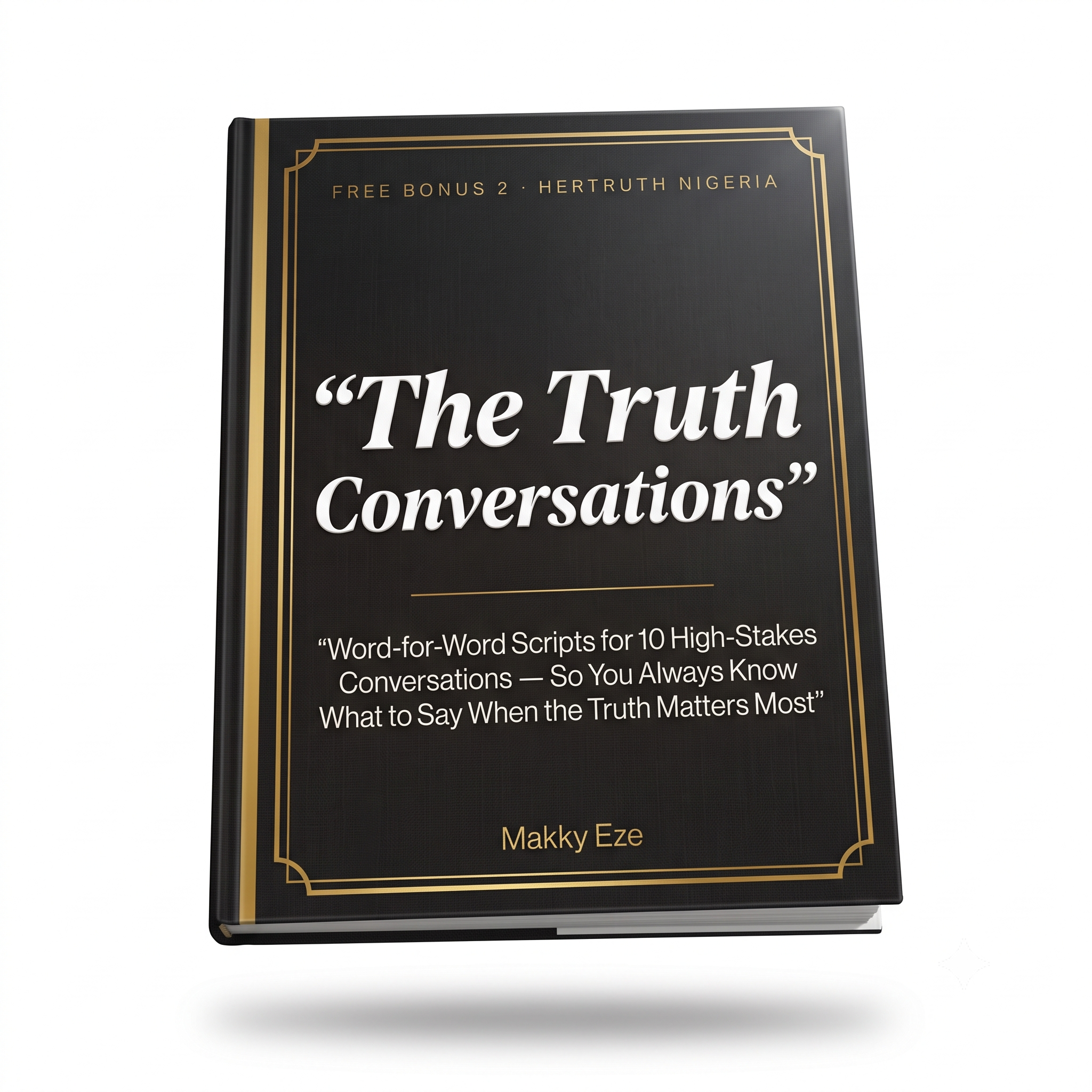
Exact word-for-word scripts for 8 high-stakes dating situations — written the way a Nigerian woman actually speaks. What to say when he goes cold. How to ask about intentions without sounding desperate. How to set a boundary without starting a fight. How to exit a situation cleanly. You get the words. All of them.
Total bundle value: ₦28,500
You pay only ₦8,500 today. Everything included.
Get The Playbook + FREE Bonuses Now Instant delivery to your email after payment. No waiting.I know you have been let down before. By people, by advice, by products that promised more than they delivered. I am not asking you to take that risk here.
Go through this guide. Work through every phase, use the tools, complete the exercises. If you do all of that and genuinely feel it was not worth every naira you paid — contact me directly and I will give you a full refund. No long back-and-forth, no conditions, no shame.
I am that confident in what is in these pages. Because I lived it before I wrote it.
Questions
I cried reading the Cultural Unlearning section. I have spent 6 years being the perfect "wife material" woman and nothing worked. Reading that section felt like someone finally telling me the truth instead of giving me more rules. I understand myself now. That alone is everything.
I am 34. I was close to giving up on love completely. This guide reminded me that the problem was never me — it was that I was operating without the right information. I completed Day 21 yesterday. I feel ready in a way I have not felt in years. This is what I needed.
My friend sent me the link at 10pm. I bought it at 10:15. I read until 1am and when I stopped I had filled 4 pages of my journal. The Non-Negotiables Builder section made me realise I had been calling everything a preference because I was afraid of being "too much." I am done with that now.
Your decision
If you get The Playbook today:
If you close this page today:
You already know what the second path feels like. You have been on it. This is the moment you choose the other one. Not for anyone else. For yourself.